Motivation
To create an immersive experience that translates breathing patterns into real-time lighting feedback, fostering a deeper connection to one's breath.
Context
A personal project exploring the intersection of breath, light, and mindfulness, created as part of the TEI Design Challenge.
Ideation
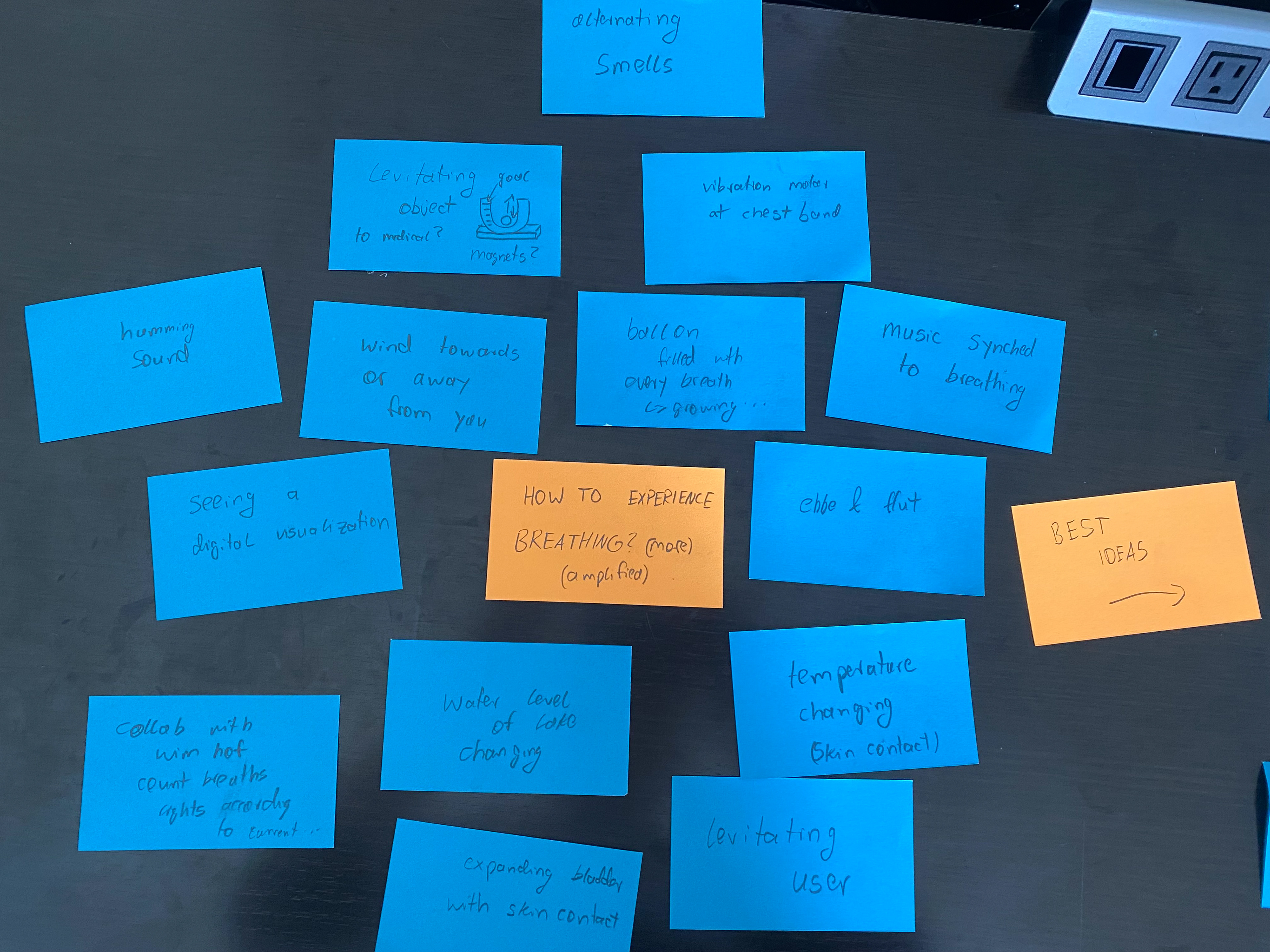
Utilized design thinking, notecard ideation, and user interviews to explore breath-driven rituals.

brainstorming on ideas on how to experience breathing
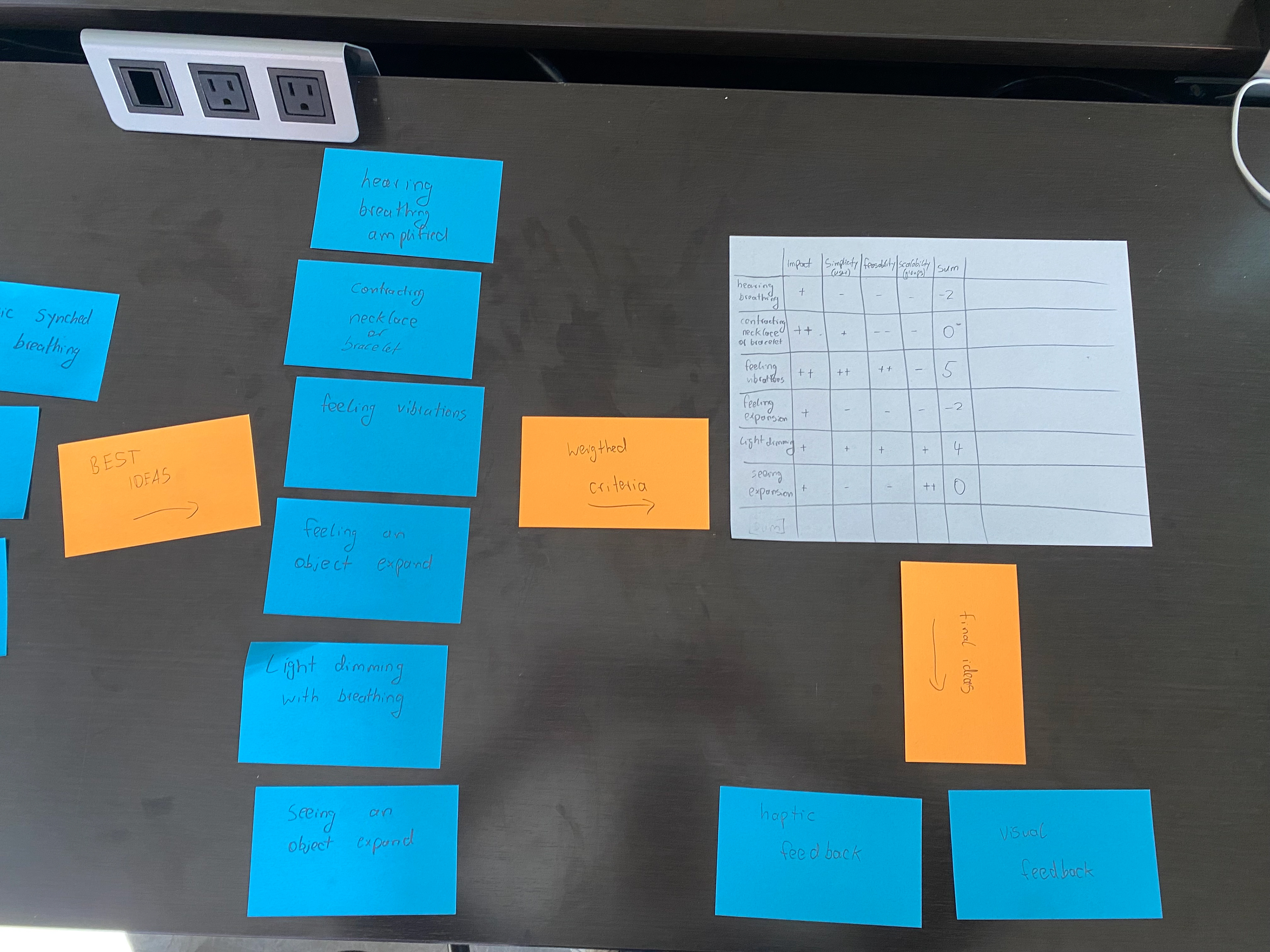
rating best ideas using C-Box model. turns out visual and haptic feedback are the winners
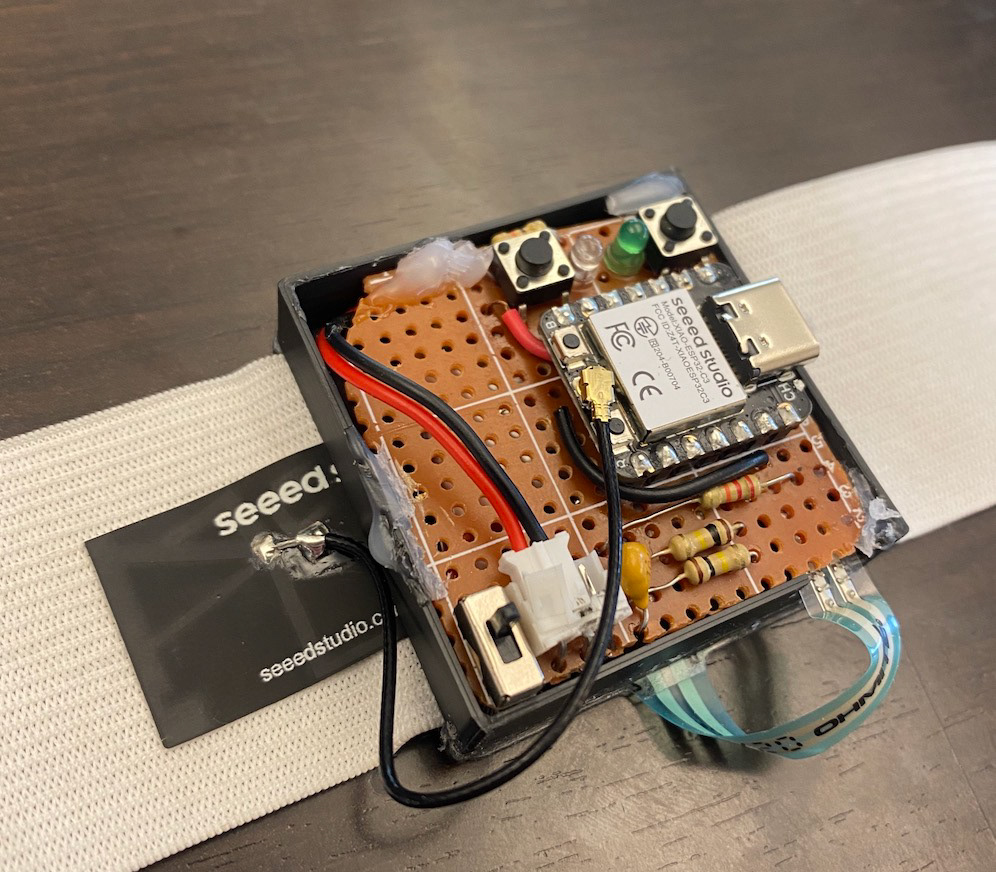
Breath Detection

Breath-detecting belt prototype — battery-powered and capable of remotely controlling a lamp.

To measure breathing, I built a force-sensitive elastic belt worn around the abdomen.
While functional, it felt obtrusive and disrupted the experience. Peer feedback confirmed that
users dislike being tethered to technology during mindful exercises.
The circuit consisted of a force-sensitive resistor, a microcontroller, and a wireless
transmitter that sent data to the lamp.
Breathing LEDS

led strips reacting to breathing

Using web interface as a visualization

using p5.js to visualize breathing

Designing a lamp

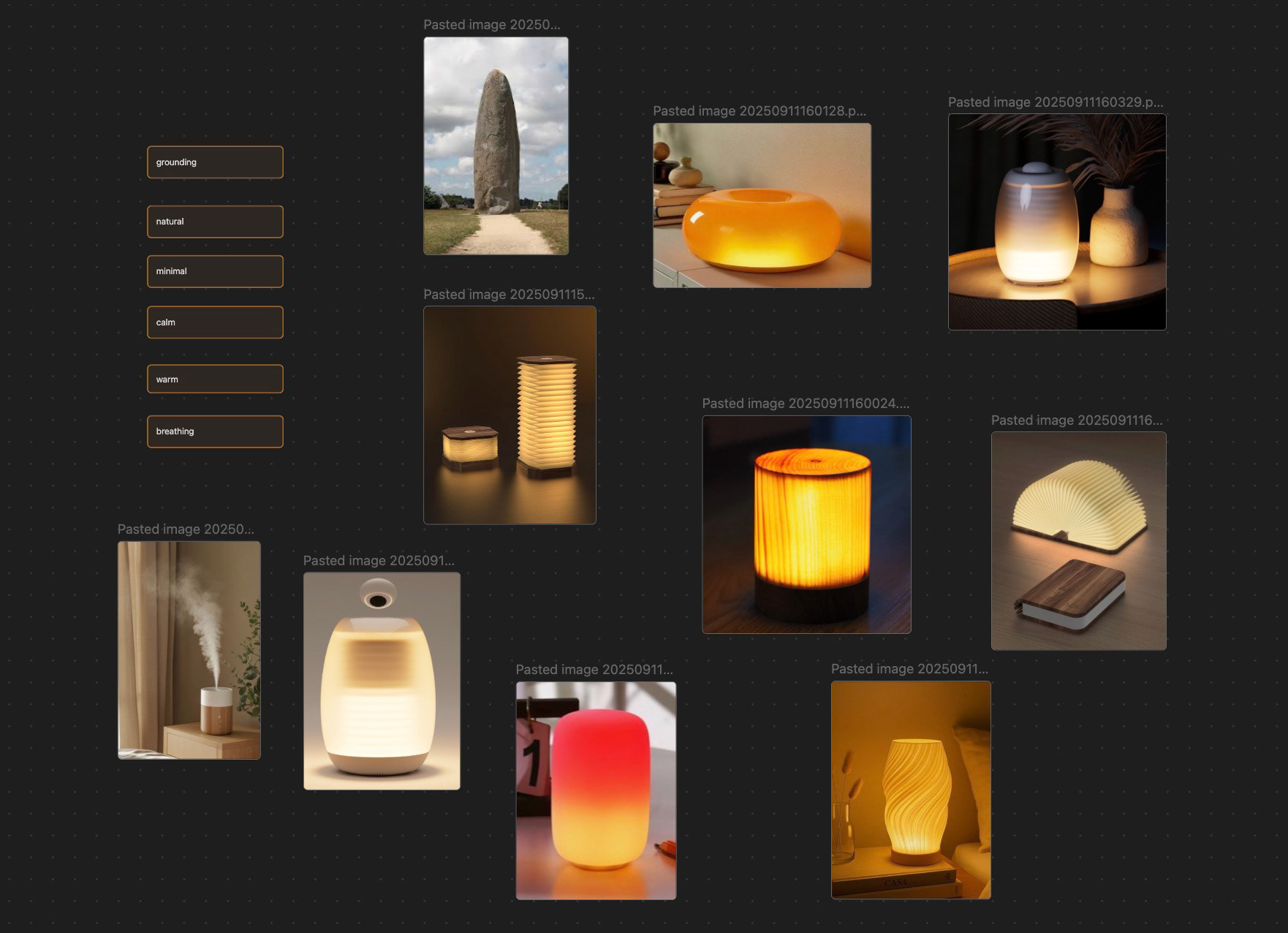
shapes and colors that feel calming, grounding, minimal, and warm.

 Major inspiration came from ohm.health.
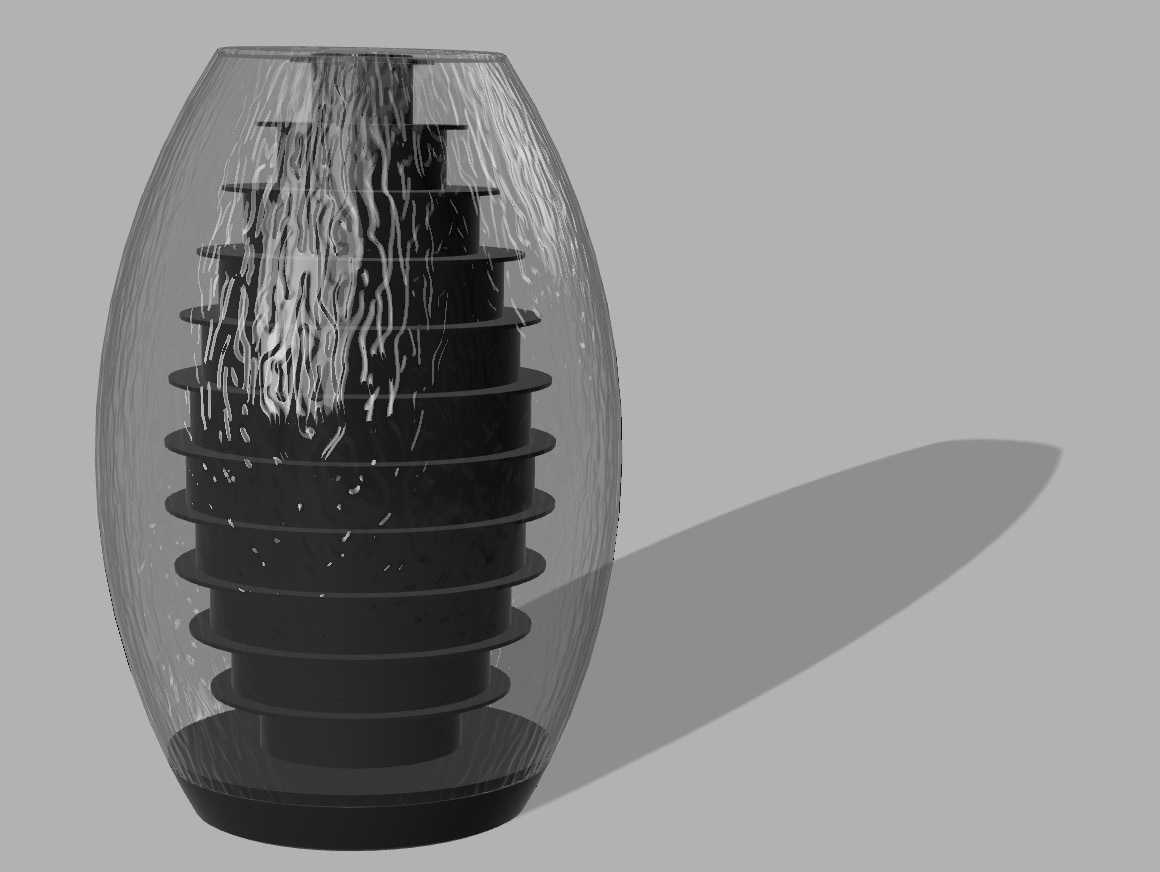
modeled in FUsion360 for 3D printing and assembly.

The internal spine was designed to hold multiple LED-band stages.
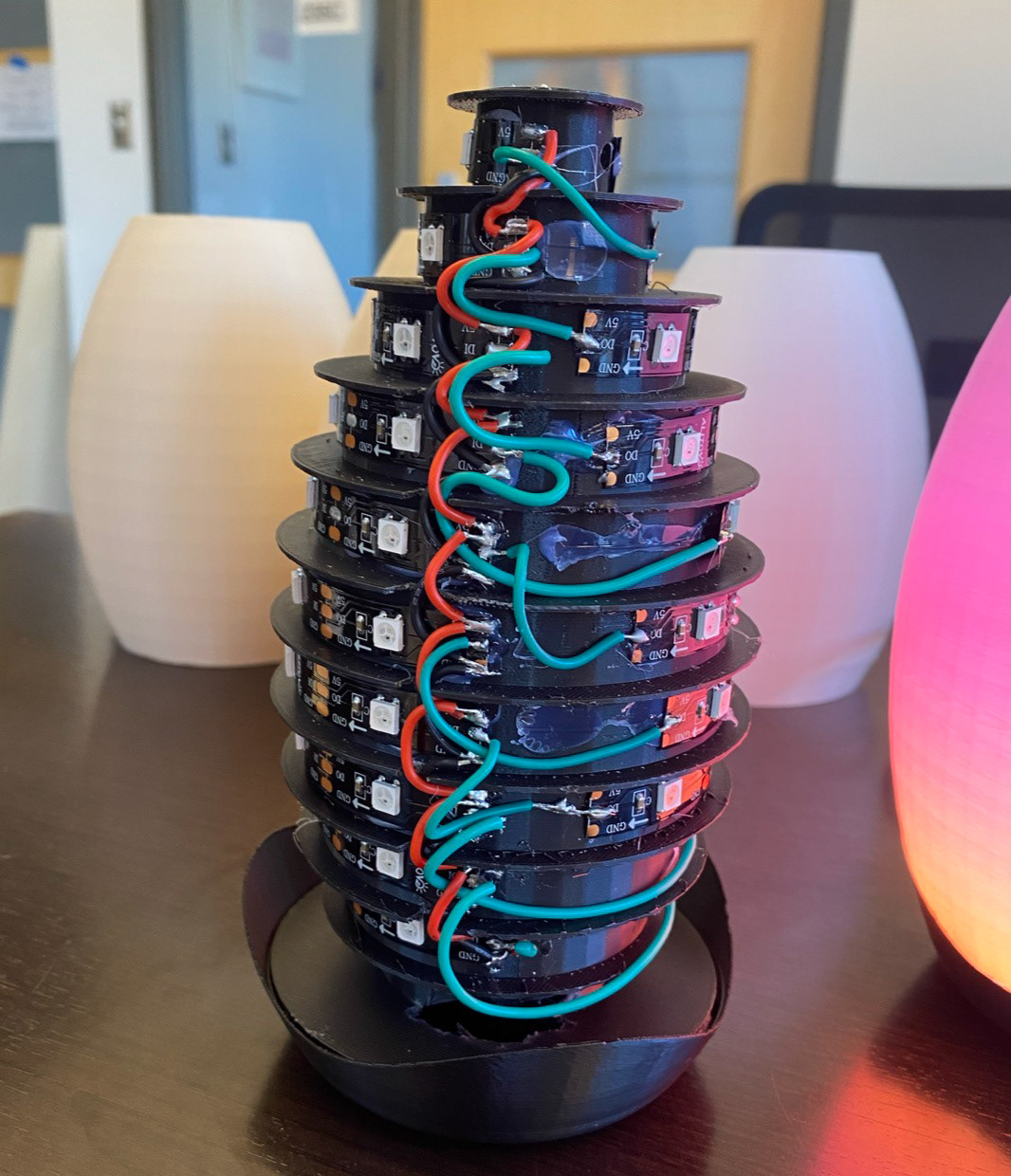
wiring caused electrical interferences seen in video ->

lamp reacts to breathing. notice blinking lights at low stages (electrical interferences)
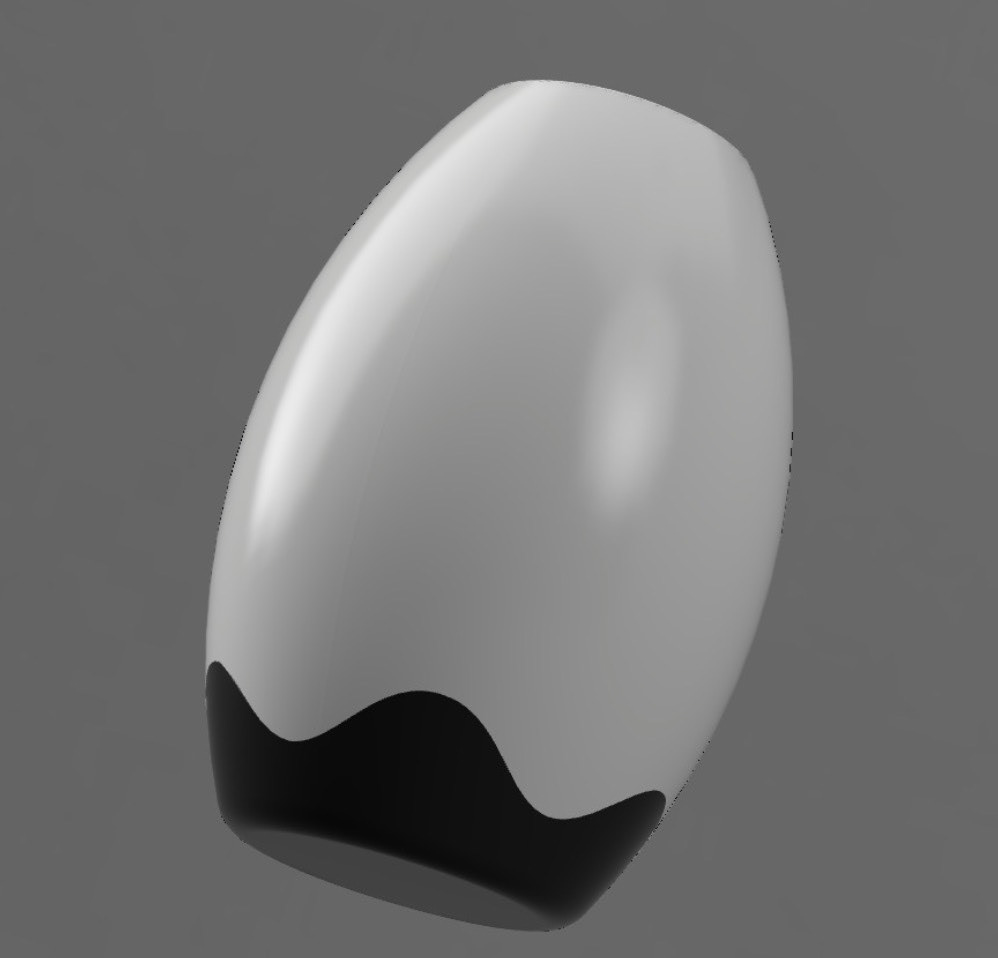
giving the lamp a breathing vibe

modeld in fusion360

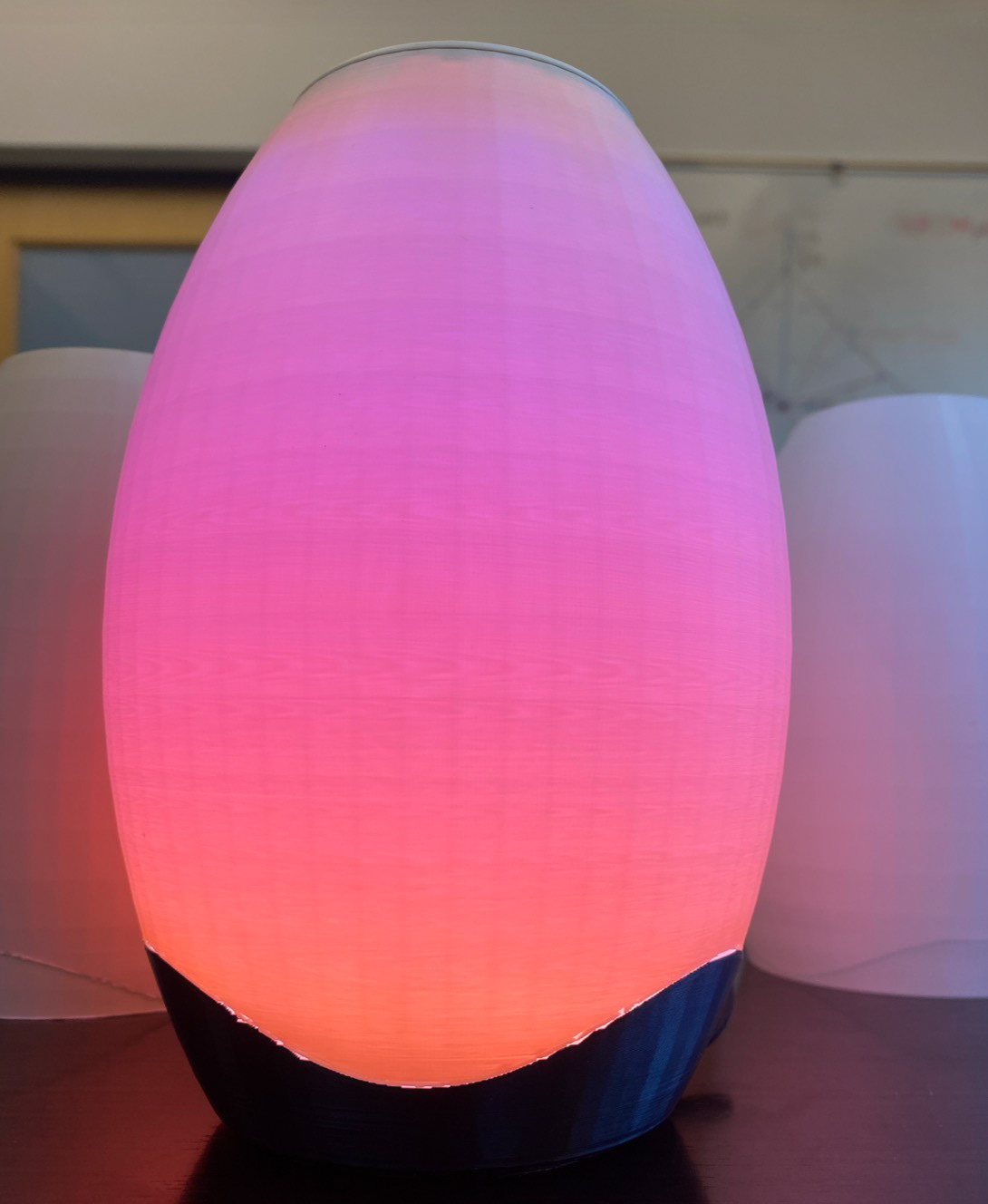
To create a smoother transition between base and top—something more “breath-like”
I experimented with a sine-wave profile. The result, however, looked more like a chocolate egg.
further design iteration
I removed the breath-detection belt and shifted toward creating a desk companion. The
lamp “breathes” along a healthy rhythm, allowing users to follow cues visually while working.
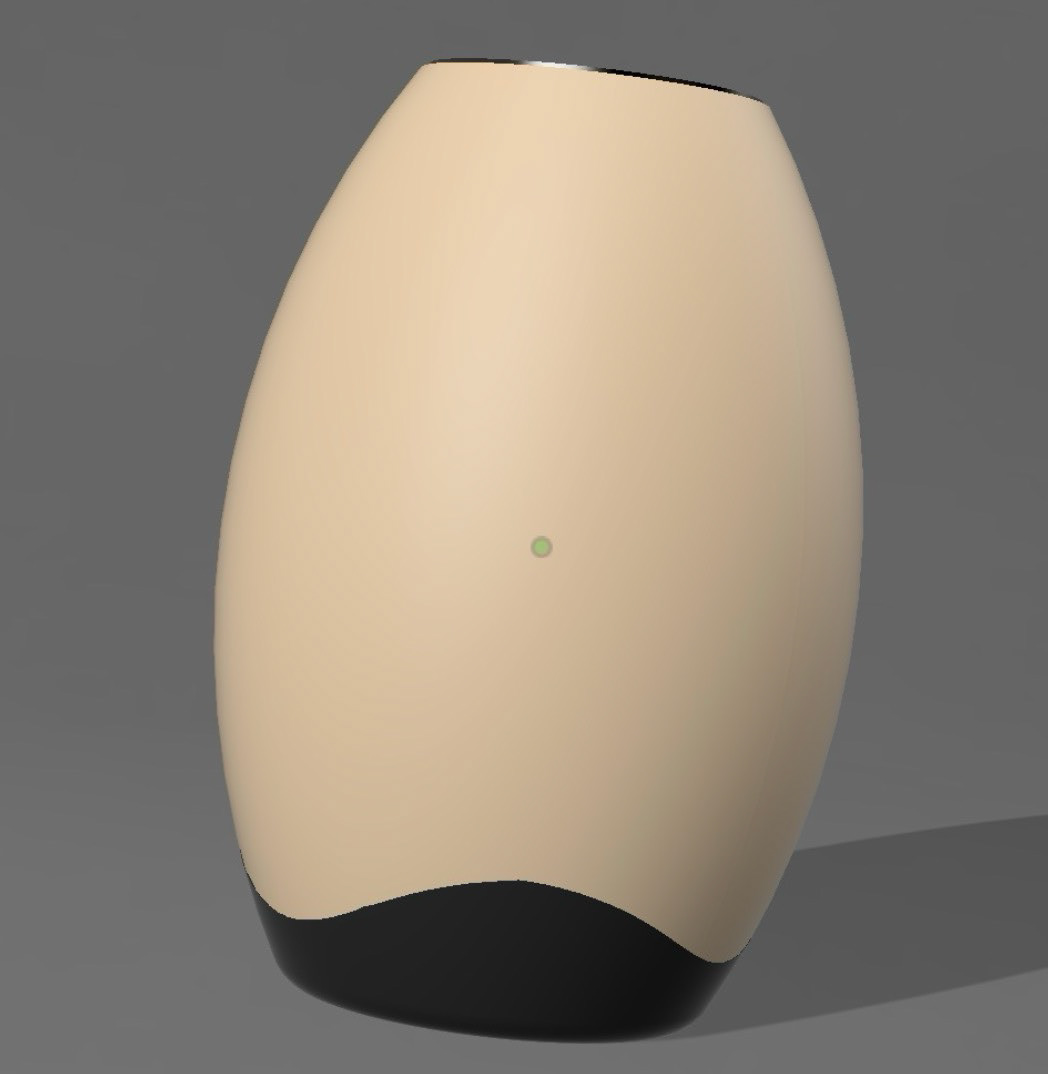
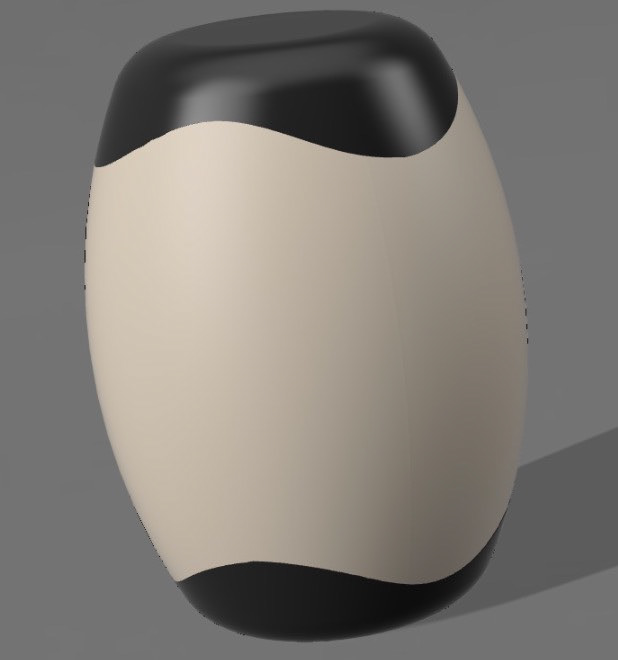
I reduced the sine-wave amplitude and refined the LED structure.
The rough white finish was replaced with a soft beige tone.

modeld in fusion 360

3d printed prototype with integrated lights

One morning, a cloudless sunrise inspired a subtle gradient, informing the lamp’s lighting palette.

THE lamp “breathes” along a healthy rhythm, allowing users to follow cues visually while working.
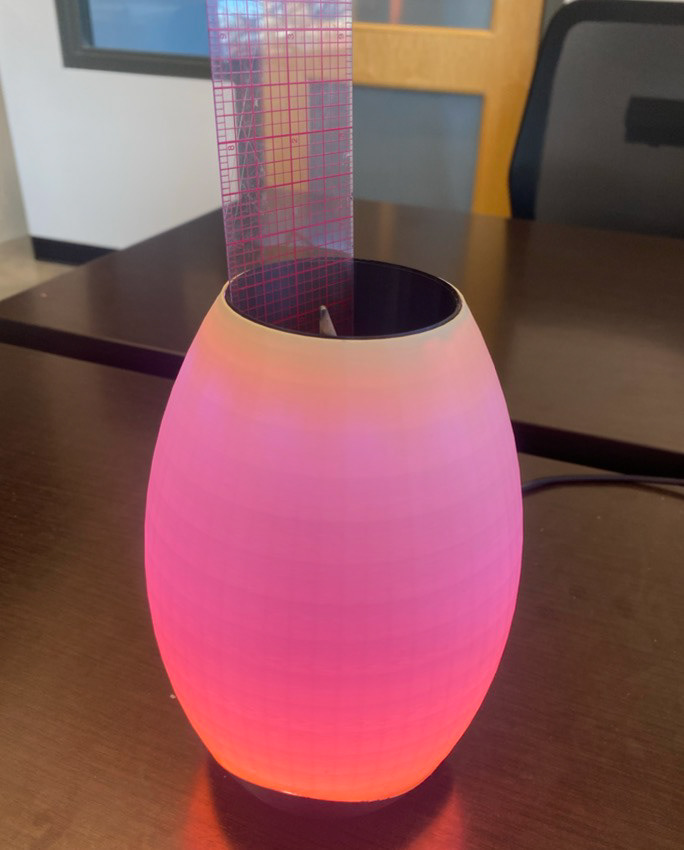
I repurposed the unused center volume as storage for desk items rather than a flat surface.

integrating apple home kit

APple home kit integration

FUture iterations
The top section still feels visually unresolved.
A clear user interface has yet to be defined.
- Integrate with smart rings to detect stress levels; when stress is high, the lamp could suggest a breathing session.
- Represent Pomodoro flow and break cycles—25 minutes of work followed by a 5- minute break, repeated four times.
Ideally, the lamp would detect breathing without any wearable sensors, capturing subtle
patterns visually when someone is present.

A symmetrical design could allow interaction by flipping the lamp like an hourglass, marking a mode transition.
Credits
Thanks to Henry WerreLl, Anna Larson, Chrissy Charlton, Kunstin Xu, Kurt Smith, and Wesley Hughes for insightful feedback.
Special credit to ChatGPT for supporting the code development.

You may also like

Back to Top